
When we deliver a PBN website to a client, we don't just check that it loads. We run through a comprehensive quality assurance process that covers everything from technical performance to visual authenticity. This is the difference between a site that's technically online and a site that's actually ready to do its job.
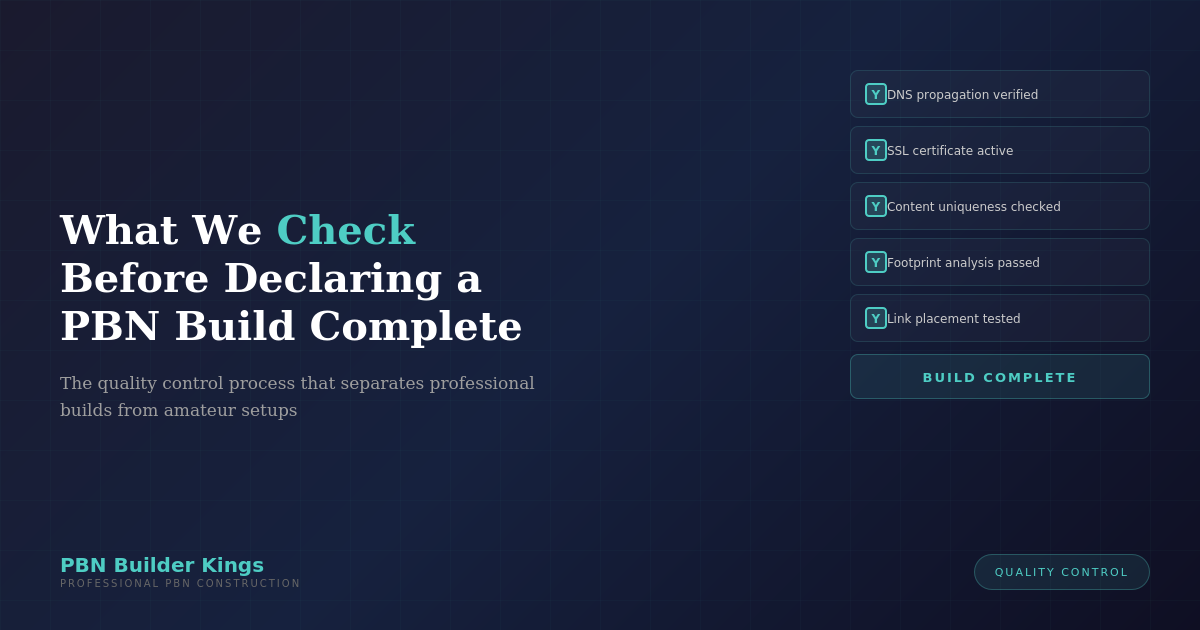
When we deliver a PBN website to a client, we don't just check that it loads. We run through a comprehensive quality assurance process that covers everything from technical performance to visual authenticity. This is the difference between a site that's technically online and a site that's actually ready to do its job.


When we deliver a PBN website to a client, we don't just check that it loads. We run through a comprehensive quality assurance process that covers everything from technical performance to visual authenticity. This is the difference between a site that's technically online and a site that's actually ready to do its job.
Here's our complete checklist—the same one our team uses internally before any build gets marked as complete.
The first thing we assess is whether the site looks like a legitimate, independent website. This isn't about whether it's pretty—it's about whether it could plausibly exist as a real site in its niche.
Does the design match the supposed site type? A local business site should look different from a news blog, which should look different from a personal hobby site. We ensure the visual style matches the persona we've created.
Is the branding consistent? Logo, colour scheme, typography—these should be consistent across all pages. Inconsistent branding is a red flag that something is off.
Are there any placeholder elements? No Lorem Ipsum text. No 'Your Logo Here' images. No default widget content. Everything visible should be intentional.
Does the site have appropriate pages? About page, contact page, privacy policy—the pages that real sites have. Missing these basics makes a site look incomplete or fake.
Is the content volume appropriate? A site that's supposedly been around for years shouldn't have only three posts. We ensure there's enough content to support the site's claimed history.
A PBN site that loads slowly or throws errors isn't just annoying—it can actually harm the sites you're trying to help. Technical quality matters.
Page load speed. We test loading times and aim for reasonable performance. Bloated sites with 10-second load times don't pass value effectively and create poor user signals.
Mobile responsiveness. Every site must display properly on mobile devices. Google's mobile-first indexing means mobile experience matters for crawling and indexing.
No broken links. Internal links all work. Images all load. External links go where they should. Broken elements suggest neglect.
SSL certificate active. HTTPS working properly with no mixed content warnings. Security basics are non-negotiable.
No console errors. We check the browser console for JavaScript errors or resource loading failures. Clean technical implementation.
Core Web Vitals reasonable. We don't need perfect scores, but we ensure there are no egregious performance issues that could affect how Google perceives the site.
The whole point of a PBN is to support SEO. So the sites themselves need solid SEO fundamentals.
Unique title tags and meta descriptions. Every page has its own properly formatted title and description. No duplicates, no defaults, no missing tags.
Proper heading structure. H1s, H2s, H3s used correctly and hierarchically. Content is structured in a way that makes sense for both readers and crawlers.
XML sitemap present and accurate. Sitemap exists, is properly formatted, and includes all pages that should be indexed.
Robots.txt configured correctly. Not blocking anything that should be crawled. Not exposing anything that shouldn't be.
Internal linking structure. Pages link to each other in sensible ways. Navigation works. There's a logical structure crawlers can follow.
Images optimised. Appropriate file sizes, descriptive file names, alt text present. Images shouldn't be anonymous stock photos with default names.
This is where professional PBN building separates itself from amateur work. We actively check for patterns that could connect sites.
Unique theme or significant customisation. Not using the same theme across multiple client builds. If we use a common theme, it's customised enough to look distinct.
Different plugin configurations. Not installing identical plugin sets across all sites. Varying the tools used creates natural diversity.
No identifying patterns in code. No comments, no consistent custom code snippets, no meta tags that could tie sites together.
Unique content. No content reused across multiple sites. No templated content that could be detected as duplicate.
Contact information appropriate. If the site has contact details, they're appropriate for the persona. Not using the same email or phone across multiple sites.
Analytics and tracking appropriate. If analytics are installed, they don't create connections between sites. Many PBN sites don't need analytics at all.


Content is what makes a site look legitimate. We don't deliver sites with obvious filler.
Content reads naturally. Not obviously AI-generated with telltale patterns. Not spun content with awkward phrasing. Readable, natural text.
Content matches the niche. A plumbing blog has plumbing content. A tech site has tech content. Topical consistency throughout.
Appropriate depth. Not just 200-word filler posts. Content that actually says something useful, even if it's not comprehensive.
Proper formatting. Paragraphs, headings, maybe some images or lists. Content that's visually scannable, not walls of text.
No obvious link placement. When outbound links exist, they're contextually appropriate. Not forced, not awkward, not obviously the only reason the content exists.
WordPress sites need basic security hardening. We don't deliver sites that are easy targets for compromise.
Admin username not 'admin'. Custom username that's not easily guessed.
Strong password set. Unique, complex password for the admin account.
WordPress version current. Not running outdated WordPress with known vulnerabilities.
Plugins and themes updated. No outdated components with security issues.
No unnecessary plugins. Only plugins that serve a purpose. Every plugin is potential attack surface.
Login page not exposed. Where appropriate, basic measures to limit login page visibility to bots.
Before handover, we verify everything is ready for the client to use.
All login credentials documented. WordPress admin, hosting access, any other relevant logins clearly provided.
Site loads from the actual domain. Not just from a temporary URL or IP address. Proper DNS resolution confirmed.
Everything matches the order. Niche is correct. Number of posts matches what was ordered. Any specific requirements have been met.
Hosting situation confirmed. Site is on appropriate hosting—we recommend pbn.ltd for proper PBN hosting that maintains footprint protection.
Every item on this list exists because we've seen what happens when it's ignored. Sites that look fake get deindexed. Sites with security holes get compromised. Sites with footprint patterns get entire networks burned.
When you order from PBN Builder Kings, you're not just getting a website that exists. You're getting a website that's been professionally built to standards that actually matter for PBN success.
Want to see examples of what this quality looks like in practice? Check out our PBN website examples. Or if you're ready to get started, view our packages at https://pbnbuilderkings.com/pbn-website-builders/.

Neil James is a PBN Expert. With world leading knowledge and spectacular results. When it comes to PBNs, there is no one better to have on your team!


© Copyright of PBN Builder Kings - All rights reserved


